Maxion Wheels Demonstrates Over 50% CO2 Reduction with Steel Truck Wheel for Daimler Truck reECONIC Project
How lightweight design and low-carbon steel translate circular economy principles into industrial reality
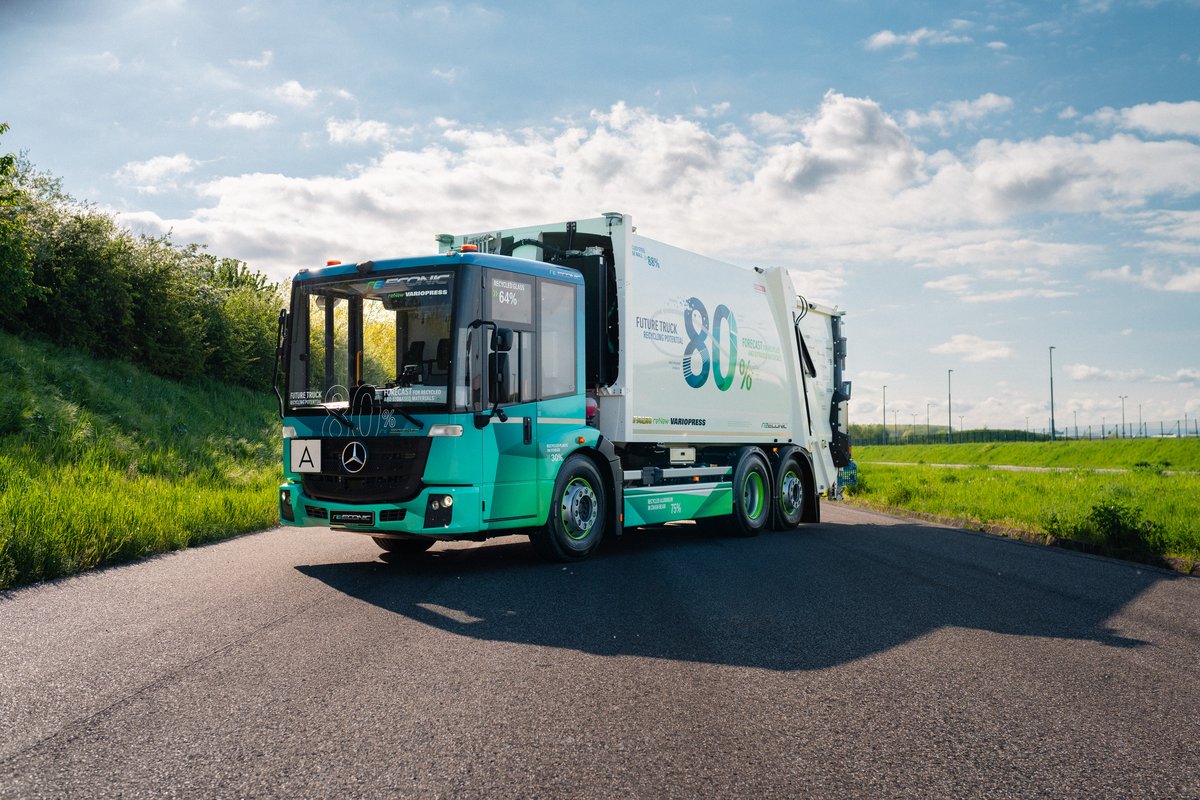
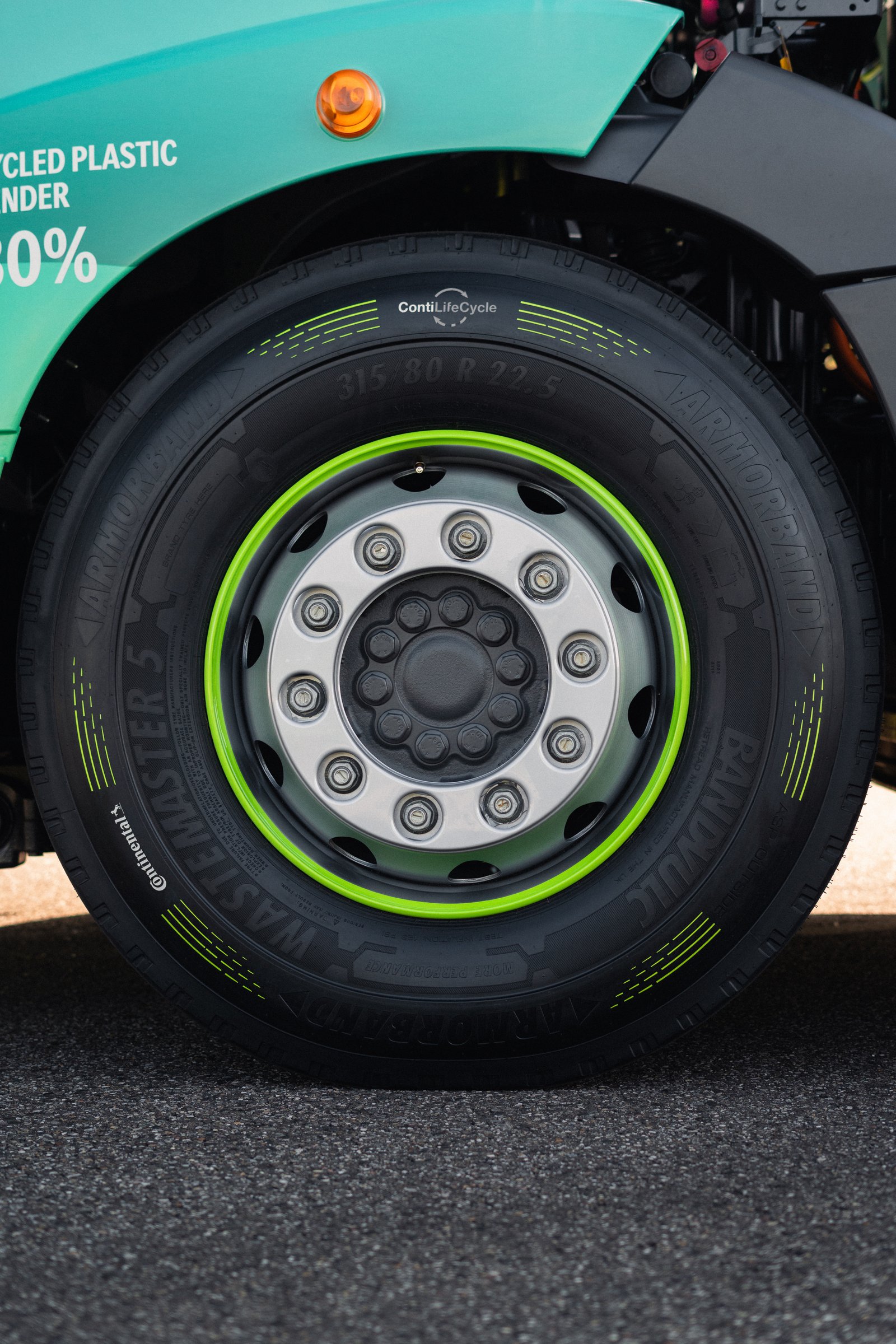
As part of the Daimler Truck–led reECONIC concept vehicle, Maxion Wheels is demonstrating how significant carbon footprint reductions can be achieved at component level through circular material strategies and advanced engineering. For the project, Maxion developed and supplied a 22.5 x 9.00” commercial vehicle steel wheel that achieves a CO2 footprint reduction of more than 50 percent compared to a conventionally manufactured wheel.
The steel wheel used on the reECONIC vehicle weighs 32.5 kilograms and was engineered using CO2‑reduced steel produced via the electric arc furnace (EAF) route, with a high share of post‑consumer recycled scrap. Combined with an optimized wheel design and responsible material selection, this approach reduced the wheel’s cradle‑to‑gate CO2 footprint from 132.7 kilograms to 61.4 kilograms of CO2 per wheel, without compromising functionality, performance, or safety.
Circular materials and lightweight engineering at component level
Steel wheels are safety‑critical components and among the heavier individual parts on a commercial vehicle. Their mass and material composition make them a relevant lever for both emissions reduction and overall vehicle efficiency. For the reECONIC project, Maxion Wheels focused on two key areas: material circularity and intelligent lightweight design.
The wheel was developed using Maxion’s unique Lightweighting Process, which combines all key performance, safety, and production parameters within advanced structural design and simulation tools. This approach allows Maxion engineers to systematically optimize geometry and material usage while maintaining full compliance with durability, load, and safety requirements. Applied to the reECONIC wheel, this process delivered a two‑kilogram weight reduction compared with previous designs, contributing to lower material demand and reducing the overall carbon footprint.
“The reECONIC project allowed us to apply our engineering and material expertise to a clearly defined circular‑economy objective,” said Karl Rode, Director of Engineering at Maxion Wheels. “By combining recycled‑material‑rich steel with targeted design optimization, we were able to more than halve the CO2 footprint of a safety‑critical steel wheel using industrially feasible processes.”
Raw material selection as the primary CO2 reduction lever
In the production of a commercial vehicle steel wheel, approximately 75 to 85 percent of the CO2 footprint originates from raw materials. As a result, material selection plays a critical role in achieving meaningful emissions reductions. For the reECONIC project, Maxion Wheels used CO2‑reduced steel produced via the electric arc furnace route, incorporating a high share of post‑consumer recycled scrap. This significantly lowers primary raw material demand, reduces iron ore mining, and cuts energy‑intensive processing steps upstream.
While lightweighting contributes to additional savings, the majority of the footprint reduction achieved for the reECONIC wheel is driven by the combination of recycled material content and low‑carbon steel production technology.
Scalable solution for future commercial vehicles
The lightweight, low‑CO2 steel wheel for the reECONIC concept vehicle was designed at Maxion Wheels’ Global Engineering Center and commercial vehicle steel wheels plant in Königswinter, Germany. The project demonstrates that significant CO2 reductions can be achieved using industrially proven processes suitable for future scale‑up.
Daimler Truck has positioned the reECONIC project as a pathway toward future series application. Selected materials, components, and production processes validated within the project are intended to inform the development of series vehicles and will undergo extensive real‑world testing starting in the second half of 2026. For Maxion Wheels, this provides a realistic framework to demonstrate how low‑CO2 steel wheels can be engineered not only as a concept solution, but as a component designed industrial scalability in mind.
The project demonstrates that circular material strategies are not limited to niche components or theoretical studies. Instead, they can be applied to high‑volume, heavily loaded parts such as commercial vehicle steel wheels, offering tangible CO2 savings within existing manufacturing frameworks.
“Working with Daimler Truck on reECONIC shows how suppliers and OEMs can jointly translate circular‑economy principles into measurable results,” said Stan Mommers, Vice President Sales EMEA at Maxion Wheels. “Component‑level innovations like this steel wheel are essential for enabling lower‑carbon commercial vehicles in the future.”
Supporting Daimler Truck’s circular economy vision
The reECONIC concept vehicle showcases how circular design, recycled materials, and resource‑efficient production can be integrated across the commercial vehicle value chain. As the wheel supplier for the project, Maxion Wheels contributes a concrete, quantifiable example of how steel components can significantly reduce CO2 emissions while remaining fully compliant with the rigorous requirements of heavy‑duty applications.
The reECONIC vehicle will be unveiled at IFAT Munich from May 4–7, 2026, where it will be displayed and demonstrated as part of Daimler Truck’s circular‑economy initiative.
ABOUT MAXION WHEELS
Maxion Wheels, a leading steel and aluminum wheels supplier, works with global vehicle manufacturers on wheels for personal mobility, transportation, agriculture, defense, and off-highway applications. Our 10,000 employees operate out of 31 locations in 14 countries on five continents, including state-of-the-art technical centers in the Americas, Europe, and Asia. Together we produce 50 million wheels a year, making us one of the world’s largest producers of wheels. To learn more, please visit Maxion Wheels’ website at www.maxionwheels.com.